

The Power of a Well-Prepared Teacher: How Content Knowledge and Aligned Coaching Transform Literacy Outcomes
How one Kindergarten classroom went from 34% to 72% proficiency
Written by: Dr. emily taubken
How teachers are trained and supported in literacy content knowledge significantly impacts student outcomes. Despite decades of effort, too many students still struggle to learn to read proficiently, limiting their academic success and future opportunities. We cannot solve the literacy crisis without equipping teachers with deep knowledge of how reading develops and how language works, increasing strategic opportunities for students to practice and apply literacy skills, and providing sustained literacy coaching that supports teachers in translating knowledge into evidence-based classroom instruction. Together, these elements enable teachers to continually strengthen their practice and improve literacy outcomes for their students.
Jordan Johns, a kindergarten teacher at Compass Community Schools, has experienced firsthand the power of deep professional learning opportunities and aligned literacy coaching support. Her classroom results demonstrate what is possible when teachers receive the knowledge, support, and resources they need to succeed. This past year, 31% of her students began their kindergarten year reading on grade level, and 72% of her students finished the year on-grade level as measured by the DIBELS assessment. So what contributed to these results?
Deep Teacher Knowledge Drives Stronger Reading Outcomes
As an early-career teacher, Jordan recognized that she needed deeper training in literacy instruction to meet the needs of her students. During the 2022–2023 school year, none of her students entered kindergarten on grade level, and by the end of the year, 34% met grade-level expectations in early literacy on the DIBELS assessment.
Eager to strengthen her practice, Jordan enrolled in MTR’s year-long International Dyslexia Association (IDA)-accredited Reading Specialist program and received ongoing job-embedded literacy coaching during the 2023–2024 school year. As she deepened her understanding of reading development and evidence-based instruction, her teaching changed—and student outcomes improved. That year, 10% of students began kindergarten on grade level, and 56% finished the year meeting grade-level literacy benchmarks.
Jordan shares that her professional learning journey “totally changed everything. I feel like I knew nothing before. I wasn’t aware of what the gaps were or how to find them. But through coaching and feedback, I learned how to truly evaluate my students' gaps and can now give them the practice they need. I now understand how the brain works and the different steps to build literacy skills. When we started doing targeted phonological awareness tasks every single day, everything changed.”
The gains continued in subsequent years. In 2024–2025, student proficiency increased from 13% at the beginning of the year to 77% by year's end. In 2025–2026, Jordan sustained those results, with student proficiency growing from 31% at the beginning of the year to 72% at the end of kindergarten. Over four years, the percentage of Jordan's students meeting end-of-year literacy benchmarks more than doubled, increasing from 34% to over 70%.
While many factors influence student achievement, Jordan's story illustrates what can happen when teachers receive sustained, high-quality professional learning aligned to the science of reading. As her understanding of how reading develops deepened, her instructional decisions became more precise – and significantly more students continue to leave kindergarten on track to become successful readers. Jordan’s story demonstrates what is possible when teachers receive sustained opportunities to deepen their expertise and refine their practice over time.
Knowledgeable Teachers Create Strategic Practice Opportunities
As Jordan’s understanding of reading development deepens, she is becoming more intentional about the amount and type of practice students receive. Rather than assuming exposure would lead to mastery, she learned to use assessment data to identify when students needed additional opportunities to practice specific skills and adjust instruction accordingly.
Jordan emphasizes that strong literacy outcomes require far more than simply giving students additional time or repeated exposure. Students need intentional practice opportunities paired with explicit modeling, immediate feedback, and instruction responsive to their individual needs. And her professional learning pathway and systems of support equip her to do just that. Her students’ literacy outcomes are consistently improving as a result.
“Sometimes, the curriculum isn’t developmentally appropriate for my students’ specific needs,” she explained. “They get three practice opportunities for a brand-new skill. They need way more practice.”
Her experience highlights how students often do not need more instructional time. They need more strategically designed, responsive practice within the time they already have. Teachers who expertly understand how literacy skills develop can recognize when students need additional practice, provide targeted feedback, and create learning experiences that quickly accelerate growth.
Literacy Coaching as Effective Professional Learning
Jordan also describes literacy coaching as one of the most impactful forms of professional learning. She explains how literacy coaching supported her in bridging science of reading knowledge to real classroom practice. Ultimately, this allowed her to turn theory into concrete and actionable next steps to accelerate learning for specific students. “I love being coached. I always take away something, and am able to apply what I learn immediately.”
Jordan shared, “For a while I knew there was a problem, but I didn’t know how to go specific enough to diagnose the problem precisely. I just knew there was a gap and I didn’t know how to make that gap close.” Through literacy coaching, Jordan learned how to leverage her content knowledge in order to use data to make increasingly precise instructional decisions. “Based on this progress monitoring data, I knew where the next step would be to inch the gap a little closer and a little closer.”
She describes one moment supporting students who struggled to blend sounds in CVC (consonant-vowel-consonant, ex: CAT) words: “We worked on some continuous blending skills I learned from my coach and it felt like magic - it worked. I didn’t realize that little path in their brain that would click for them if I tried something different.”
Beyond instructional growth, Jordan emphasizes that coaching made difficult work sustainable. In a classroom context where helping students close literacy gaps can feel daunting, literacy coaching has helped to frame big challenges into manageable next steps. “It feels overwhelming to get a child from never holding a pencil or being able to say their name to reading on grade level, especially when they are multilingual learners. It feels like this mountain of, ‘How am I ever going to get there?’ But it’s really one step, one tiny step at a time.”
So What Now?
Teachers need deep literacy expertise that our current systems often fail to recognize or deliver. Strong literacy outcomes require a coordinated approach. Teacher preparation should be grounded in the IDA Knowledge and Practice Standards and evidence-based literacy practices to ensure teachers are equipped with deep knowledge of how reading develops and how language works. This expertise equips teachers to create strategic and responsive practice opportunities that help students develop literacy skills. Once in the classroom, teachers need continual support through ongoing, job-embedded professional learning and consistent literacy coaching that helps translate knowledge into effective instructional practice.
Yet, high-quality literacy coaching remains unavailable to most teachers. State and local leaders should prioritize sustained funding for high-quality literacy coaching, evidence-based professional learning, and implementation support that allows teachers to apply new learning directly in their classrooms.
Improving literacy outcomes requires investing in teacher expertise. When teachers understand how reading develops and receive ongoing coaching to refine their practice, more students leave their grade level on a path toward lifelong literacy success. As Jordan describes, “teaching reading is complex, but attainable” when teachers receive strong preparation and support. When teachers deeply understand language and literacy development, equitable student outcomes are possible. There is nothing more powerful than a well-trained and well-supported teacher.
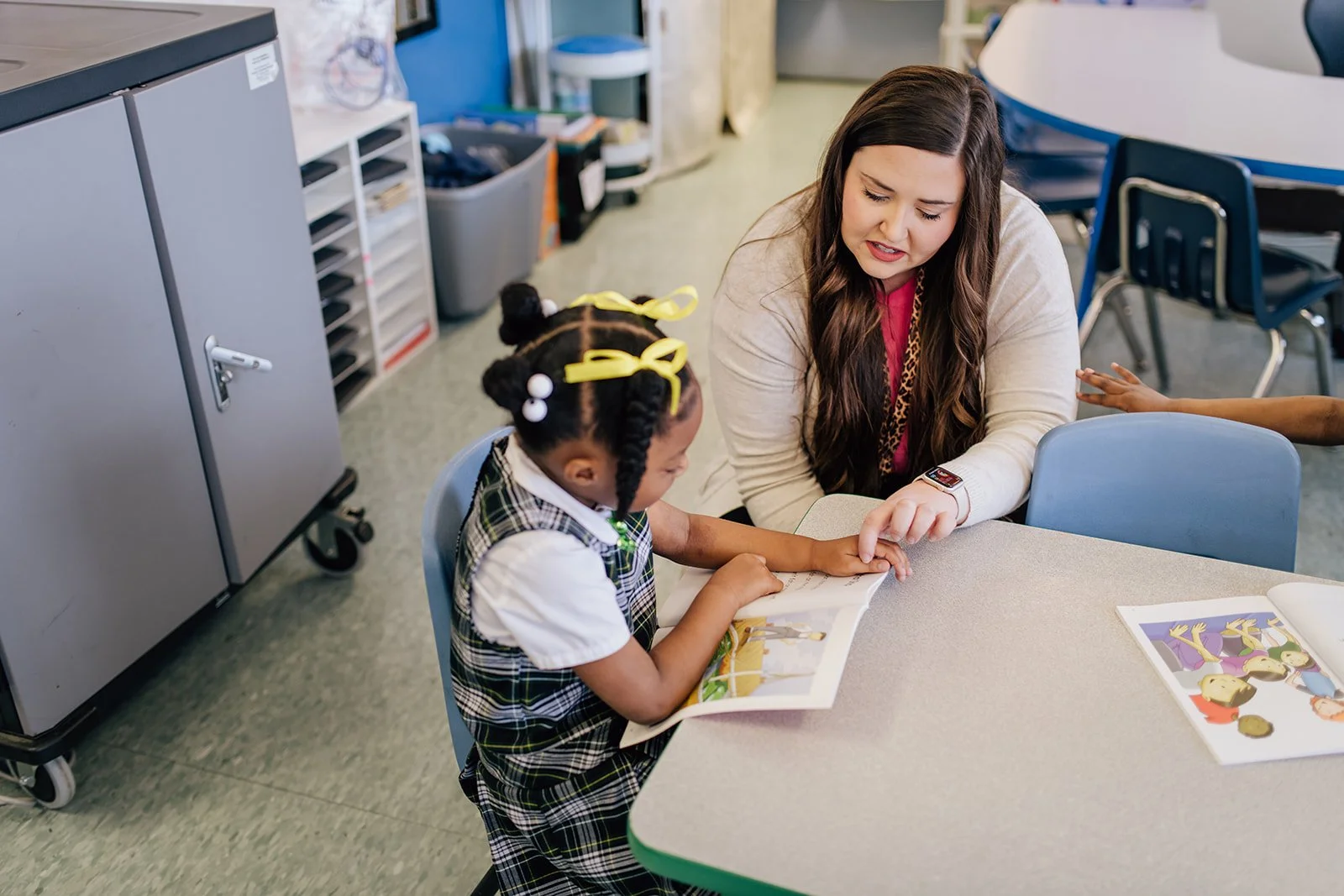
Jordan Johns, 2024
